Fingerstall – Essential Protection for Electronics and Cleanroom Environments
Introduction
In precision industries such as electronics, semiconductors, and medical manufacturing, the smallest contaminants or electrostatic discharges can cause serious defects. This is why fingerstalls play an essential role in providing both personal protection and product safety. Unlike traditional gloves, fingerstalls cover only the fingers, giving workers dexterity while ensuring cleanliness, static protection, and hygiene.
This article will explore the definition, features, benefits, applications, and buying considerations for fingerstalls, making it easier for businesses to choose the right type for their production needs.
What is a Fingerstall?
A fingerstall is a protective covering worn over individual fingers, commonly made of latex, rubber, or anti-static materials. They are widely used in industries where:
- Full gloves may reduce sensitivity or comfort.
- Finger-specific protection is required.
- Electrostatic discharge (ESD) control is critical.
Fingerstalls are available in various forms, including:
- Latex fingerstalls – for general protection and hygiene.
- Conductive or ESD fingerstalls – for handling sensitive electronic components.
- Powdered or powder-free versions – depending on cleanroom requirements.
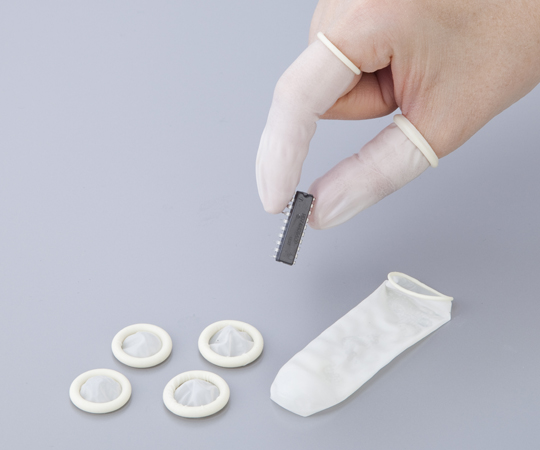
Key Features of Fingerstalls
- Material Options
- Latex: Excellent elasticity and comfort.
- Rubber: High durability and protection against chemicals.
- Anti-static materials: Essential for electronics and semiconductor applications.
- Design
Fingerstalls are designed to fit snugly on each finger, ensuring workers can handle tiny parts without losing precision. They may have textured tips for better grip and are usually rolled for easy application.
- Size Variations
To maximize comfort, fingerstalls come in multiple sizes (small, medium, large). The correct fit prevents discomfort during long shifts.
- Powdered vs. Powder-Free
- Powdered fingerstalls are easier to put on and remove.
- Powder-free fingerstalls are more suitable for cleanroom and sensitive environments, reducing contamination risk.
Advantages of Using Fingerstalls
- Protection Against Contamination
Fingerstalls prevent oils, sweat, and dirt from contaminating delicate components, especially in electronics and optical devices.
- Electrostatic Discharge (ESD) Control
In industries where static electricity can damage products, ESD fingerstalls help neutralize static charges, providing safe handling of printed circuit boards (PCBs), microchips, and sensors.
- Improved Dexterity and Comfort
Unlike full gloves, fingerstalls allow workers to keep most of their hand uncovered, improving breathability and flexibility.
- Cost-Effective Solution
Since they only cover the fingers, fingerstalls often cost less than full ESD gloves while still providing essential protection.
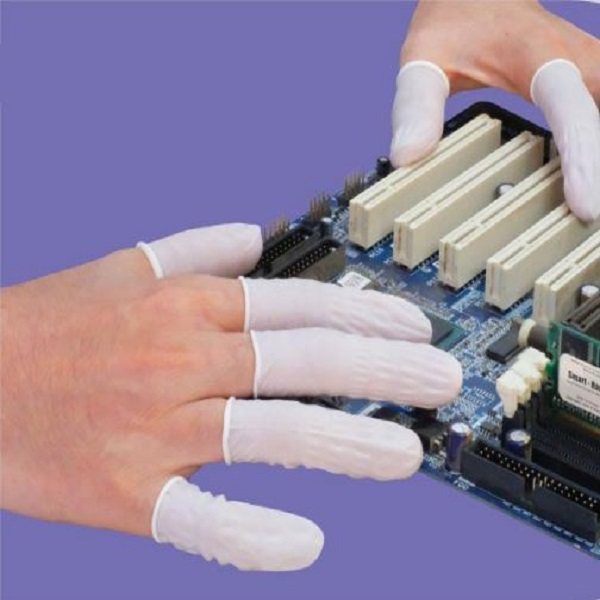
Applications of Fingerstalls
Fingerstalls are widely used in:
- Electronics assembly – protecting sensitive PCBs and microchips.
- Semiconductor industry – minimizing static discharge during delicate operations.
- Medical and laboratory settings – ensuring hygiene while maintaining tactile sensitivity.
- Cleanrooms – preventing contamination in controlled environments.
- Jewelry and watchmaking – protecting products from scratches or fingerprints.
For example, when handling printed circuit boards (PCBs), using fingerstalls alongside ESD gloves can provide maximum safety against both static electricity and contamination.
Fingerstall vs. ESD Gloves
While both fingerstalls and ESD gloves serve similar functions, there are distinct differences:
- Fingerstalls: Provide partial coverage (only fingers), offer more breathability, and are cost-effective.
- ESD Gloves: Offer full-hand protection and are better for continuous static control.
Some companies use fingerstalls for short tasks requiring dexterity and switch to gloves for longer operations.

How to Choose the Right Fingerstall
When selecting fingerstalls, consider the following:
- Application – Are you working with electronics, chemicals, or in a cleanroom?
- Material – Latex for elasticity, rubber for durability, anti-static for electronics.
- Powdered vs. Powder-Free – Choose powder-free for cleanroom use.
- Fit and Comfort – Proper sizing ensures no loss of dexterity.
- Budget – Fingerstalls are cost-effective, but prices vary based on material and features.
For comprehensive protection in a cleanroom environment, fingerstalls can be combined with ESD wrist straps to ensure full grounding of the operator.
Best Practices for Using Fingerstalls
- Store properly in a clean, dry place to maintain material integrity.https://megaline.com.vn/en/anti-static-wrist-strap
- Dispose after use in cleanroom environments to avoid contamination.
- Ensure compatibility with other ESD control products, such as ESD chairs and mats.
- Train workers on correct use to maximize effectiveness.
Conclusion
Fingerstalls are an essential protective product for industries where precision, cleanliness, and static control are critical. Their ability to provide targeted protection while maintaining dexterity makes them a preferred choice in electronics manufacturing, cleanrooms, laboratories, and more.
By understanding their features, applications, and advantages, businesses can make informed decisions when choosing the right fingerstall type. For the best results, they should be used in combination with other ESD-safe equipment, ensuring a comprehensive static-control system.